
How a tiny handmade world of a kid’s film brought back our first months in Spain.
One of my favorite spots in Madrid is Matadero cultural center. They host an annual international animation festival Animario. The best part of it is that you can find amazing gems that are far away from mainstream movies. French, Mexican, Canadian. I chose “Olivia” simply because I love stop-motion. In this rapidly developing world, there is something special about seeing things made by hand. But what I didn’t expect was that the hand-made puppets could bring me back to the real life streets of our first neighbourhood in Spain, when we tried not to get drawn into depression while building our life from scratch in Barcelona.
Olivia y el terremoto invisible (Olivia and the Invisible Earthquake) is a Catalan stop-motion film directed by Irene Iborra. Set in Barcelona, it’s based on the novel El cine de la vida (The Cinema of Life) by Maite Carranza, which explores poverty and the fragile worlds of children.
The film follows a mother and her two children who lose their home in a middle-class neighbourhood of Barcelona because of financial problems and have to start over somewhere much more modest. I could almost feel the same shock when they saw their new apartment – worn-out walls, no lights, no furniture. That happened to us as well! We didn’t even have a refrigerator at first! We slept on a cheap bed and sat on plastic chairs we bought on a second-hand app. The neighbourhood itself reminded me of the one where we rent an apartment. The narrow streets, where you can hear your neighbours argue, the kids playing with a ball just behind your balcony. I recognised those Catalan “adéu” and “bona nit” (“Bye” and “Good night”), I could hear those words from the thin walls we had.
Although our stories are very different, many of the emotions felt strangely familiar. The lack of money, the broken social connections, the uncertainty of starting over. I could recognize their worries. The everyday problems, like finding food or making ends meet, were mixed with a much deeper fear: would we ever be able to leave this place for good? We hated it. The neighbourhood, the city and the whole list of problems.
While volunteering for the local Red Cross department, I’ve seen many broken families with no money to feed their children or to buy them stuff for school. They were never crying, it was just a blank stare of desperation. We gave them yoghurt and pasta, but they were somewhere else, thinking about the roof above their heads and the school days ahead, with all the emotional struggles they would bring. I shared hugs with people who didn’t know where to start over. All those memories were brought up again just by watching a kid’s film!
There were moments when I could feel tears welling up. And I wasn’t the only one crying. Interestingly, the children in the audience seemed to take it much more lightly than the adults. So while their parents were looking for a napkin, kids were laughing.
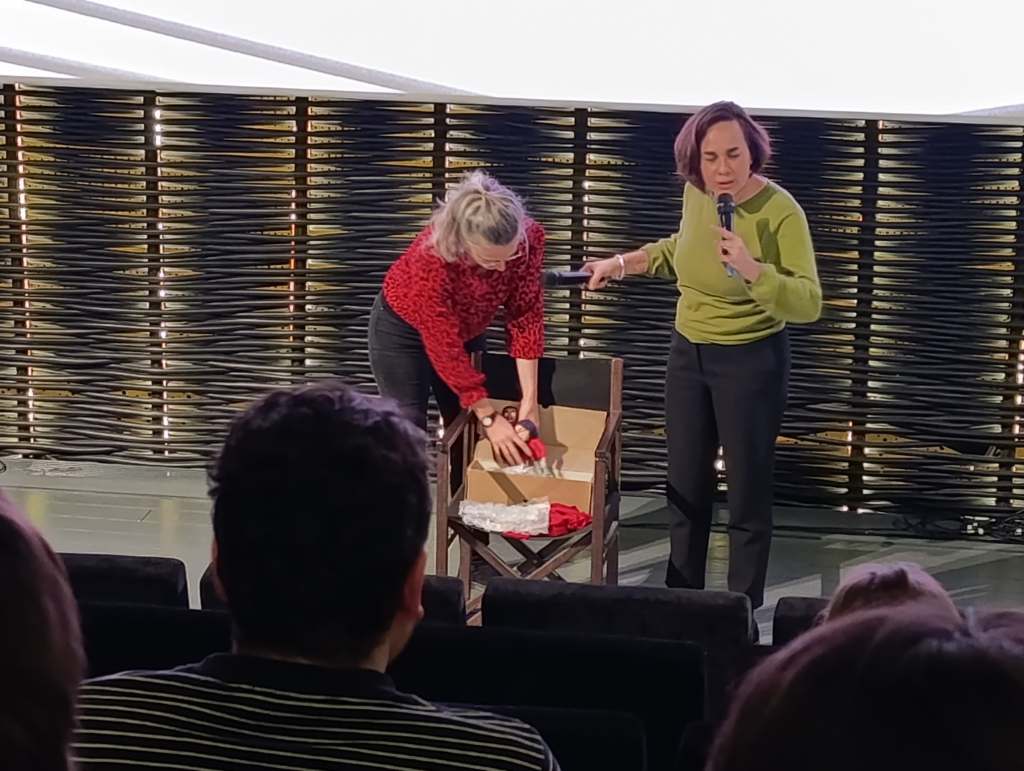
I couldn’t stop asking myself one question: How did she get all those emotions so right? The answer came from Irene herself as we were lucky enough to attend a Q&A with the director. So we learned that the film took seven years to make, and only one of those years was spent on the animation itself. She worked with social workers and people from support organisations to understand what these families and children actually go through. And I think you can feel that in the film – the emotions never seem exaggerated or made up just for the story. She was particularly careful not to turn these families into victims or make their experiences feel trivial simply because this is a children’s film.
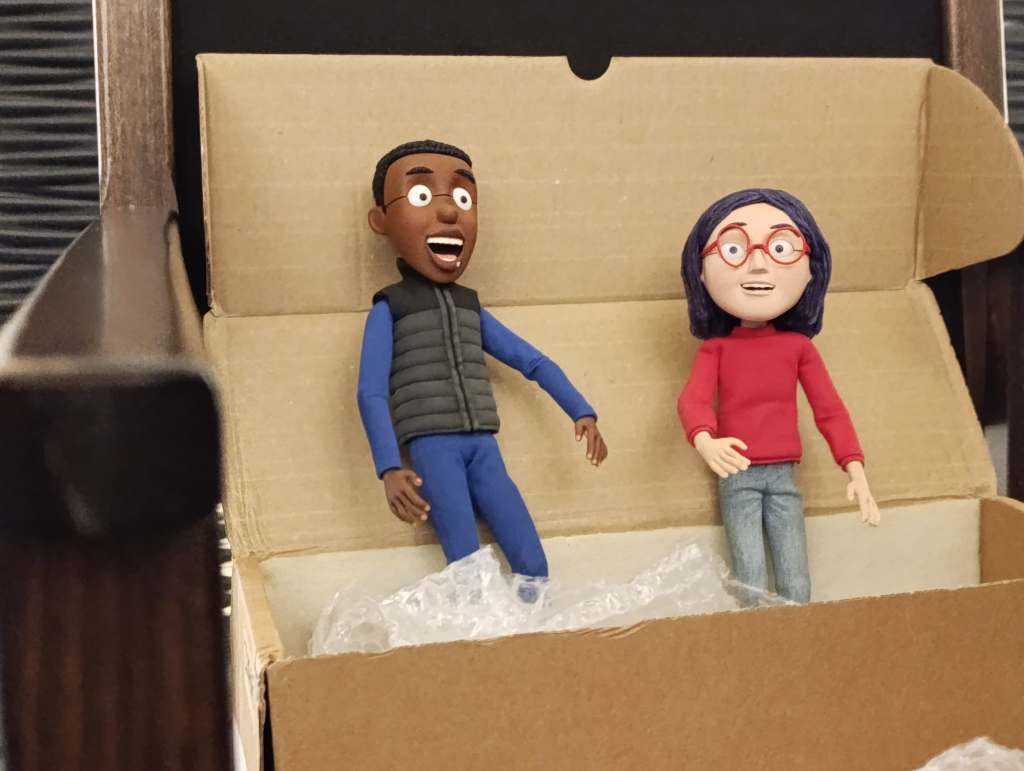
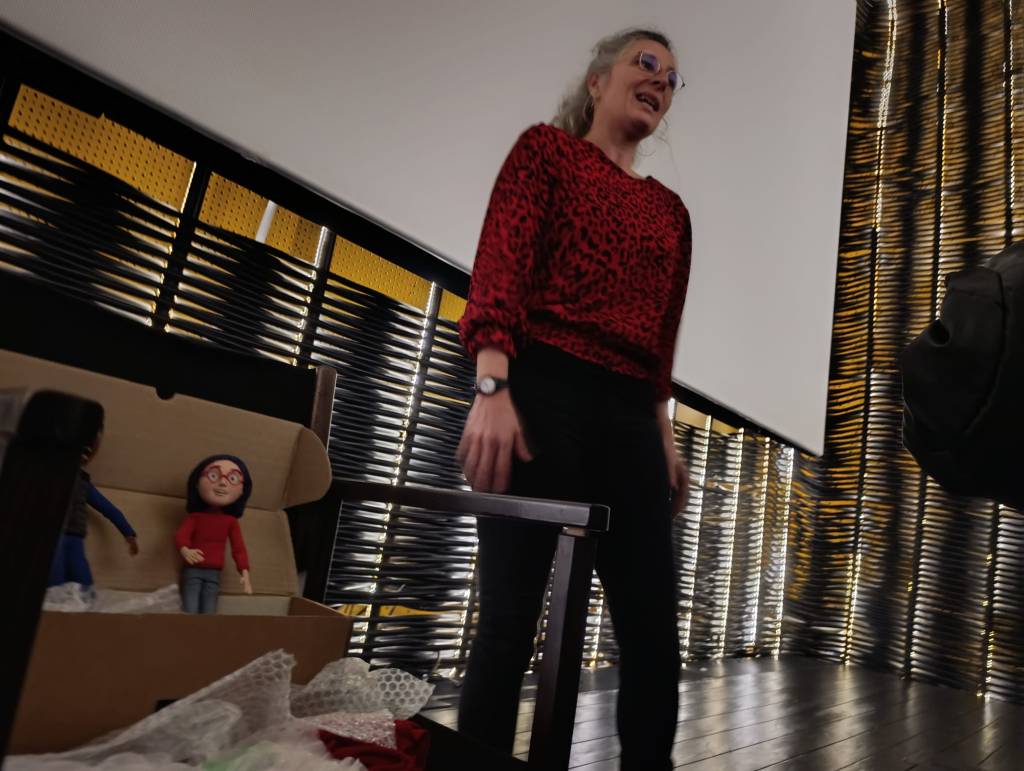
And the children were interested in more grounded details. What were the puppets made of? How could she make them laugh and cry? And we all could see it in real life as the team brought the Olivia doll to the premiere. I didn’t expect it to be so small!
The puppets were made from a combination of materials: silicone hands, plastic heads, and wire-and-foam bodies. The tears were made from petroleum jelly, while the blushing was added later in post-production. Each puppet had an entire collection of interchangeable lower faces so the characters could speak and laugh naturally.
Watching the children in the audience laugh and ask questions, I kept thinking about my little niece, whom I miss so much. I could almost imagine how fascinated she would be by all those tiny faces and moving parts. I wanted to share that moment with her, but the only thing I could really share was a couple of phone-made pics.
I blamed Barcelona for my personal problems, but it never was the city’s fault. Recreated in this tiny handcrafted world, it had a charm all its own. I saw the streets I’d once wanted to escape from, looking almost strangely gentle. And for the first time, I could smile at them with tenderness.


Leave a comment